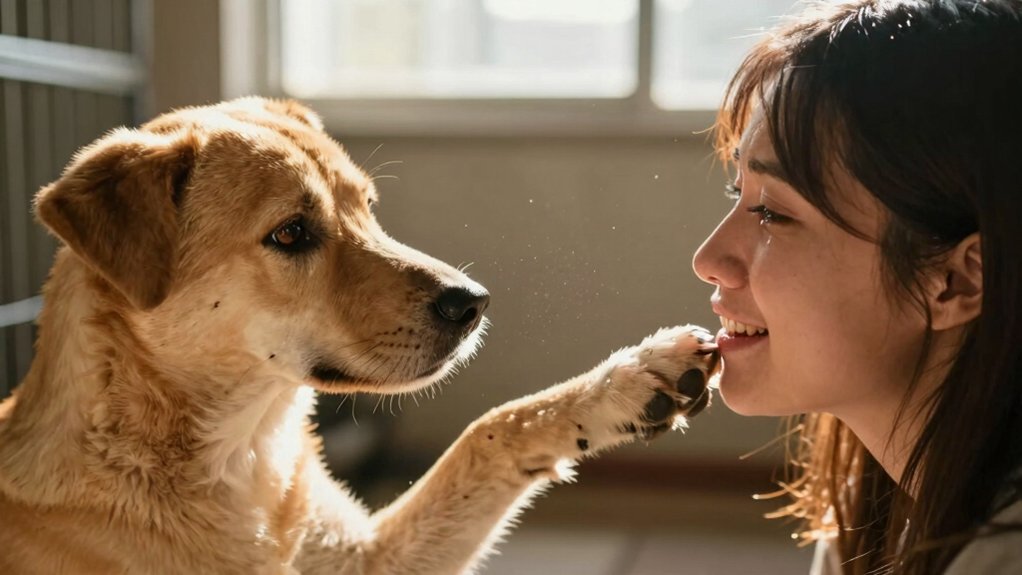

When you lock eyes with a shelter dog, that magical moment isn’t one-sided—they’re actively choosing you! You’ll notice their relaxed body language, wagging tail, and the way they lean against your legs. Dogs read your calm voice, gentle movements, and scent, instantly bonding through oxytocin release. Real adoption stories reveal withdrawn pups suddenly becoming affectionate with their perfect match, following visitors room to room while ignoring everyone else. It’s genuinely mutual rescue! Discover how these incredible bonds form and transform both lives.
Key Takeaways
- Shelter dogs actively signal their chosen human through relaxed body language, sustained eye contact, and leaning against their legs.
- Dogs approach one specific visitor repeatedly, following them through rooms while ignoring others, predicting adoption success remarkably well.
- Withdrawn shelter dogs suddenly become affectionate with compatible visitors, communicating genuine compatibility through unmistakable behavioral cues.
- Consistent daily care and predictable routines after adoption transform the relationship into an unshakeable bond based on trust.
- Adoption becomes genuinely mutual when dogs select their match and adopters reciprocate, creating exceptional bonds through dual rescue.
The Moment a Shelter Dog Chooses You
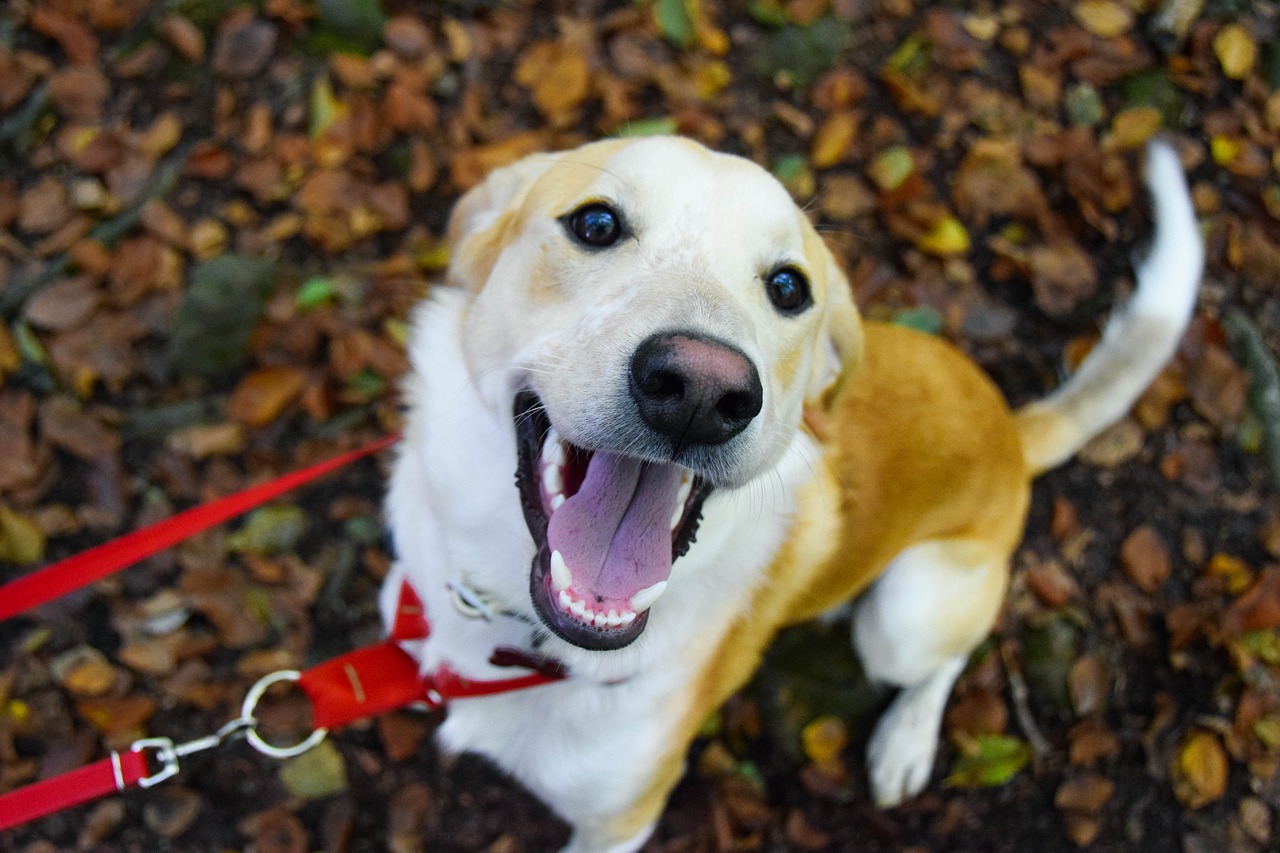
When you walk into a shelter and lock eyes with a dog who’s been waiting for you, something magical happens—and it’s not just in your imagination! That soft, sustained gaze with relaxed eyes? That’s your dog communicating, “You’re the one!” You might notice their whole body shift—ears soften, tail wags loosen, and tension melts away. Maybe they lean against your legs or offer their paw, ignoring everyone else around you. That’s real choosing happening right there! They’re reading your calm voice, your slow movements, even your scent. In that incredible moment, both your hearts release oxytocin, creating an instant bond that feels absolutely undeniable. You’ve found each other, and you both know it! However, the bond formed in those first moments may require patience and commitment as shelter dogs often have unknown histories and need time to adjust to their new home.
Why Appearance Isn’t What Makes a Dog Choose Their Person

You don’t pick your best friend based solely on appearance, right? You choose them because they get you, they’re reliable, and they make you feel safe. That’s exactly how dogs think! Your personality, patience, and genuine connection are what make a dog choose you as their forever person. Dogs are drawn to owners who understand their emotional needs and provide consistent, trustworthy care through oxytocin-releasing interactions like petting and eye contact that deepen the bond between you and your companion.
First Greetings: How Dogs Signal Their Selection
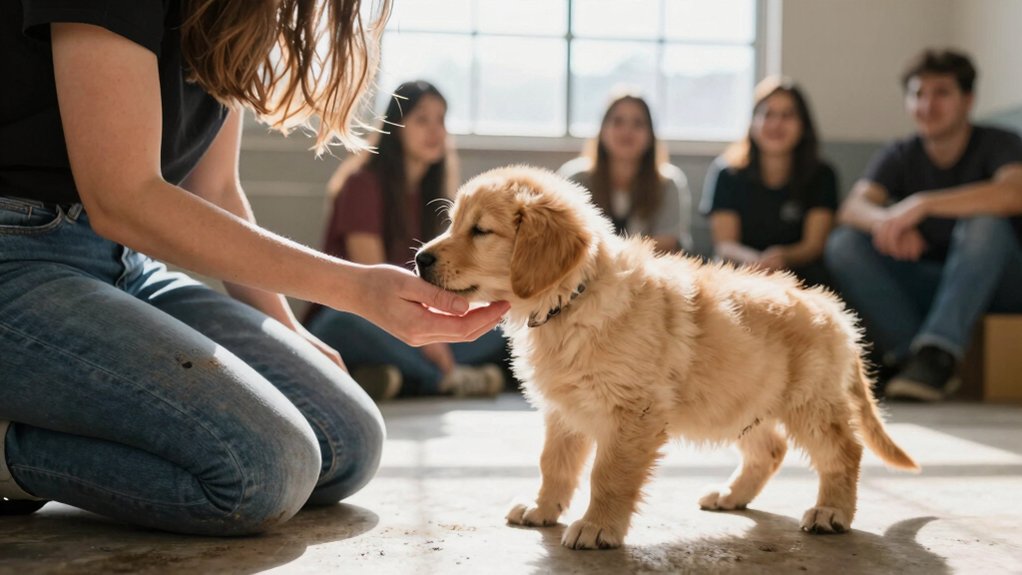
Now that you know a dog’s choice goes way deeper than looks, here’s the exciting part: you can actually *see* it happening! When a dog first meets you, watch their body language closely—relaxed muscles and an open mouth signal genuine interest, not just politeness. Do they approach you with a curved path and sideways stance? That’s friendliness speaking! Notice if they choose to close the distance without food lures or leash pressure; that’s *their* decision, and it matters! A dog selecting you will sniff your hands and clothing more intensely, gathering information about who you are. They’ll peek back at you during room exploration, treating you like a comfortable anchor. Allowing your dog to take their time during these first moments shows respect for their comfort level and builds the trust that makes them feel secure choosing you. These subtle signals? They’re your dog saying, “You’re the one I’m choosing!”
The Critical Bonding Window After Adoption
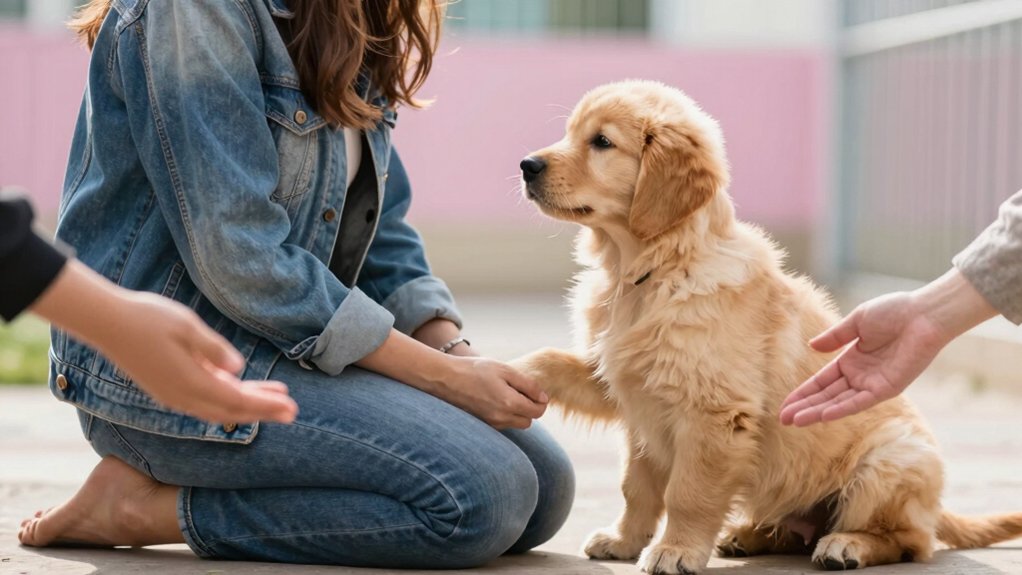
The moment your new dog walks through your door, something incredible—and a little stressful—starts happening inside their body! Their cortisol spikes, flooding their system with stress hormones as they adjust to their brand-new environment. Here’s the thing: that scared, clingy, or hyper behavior you’re seeing? It’s not really who they are—it’s their stress physiology talking!
Within just days, their cortisol typically returns to normal, marking a sensitive window where predictable routines become your secret weapon. Consistent feeding times, sleep schedules, and bathroom breaks signal safety, helping their nervous system settle faster. Research shows that separation-related behaviors are particularly common during this adjustment period, affecting over 90% of newly adopted dogs as they acclimate to their new homes. About 25% of returns happen within two days, so those first few days matter tremendously. You’re not just meeting your dog; you’re helping them find their footing in your world.
How Consistent Care Becomes Preference
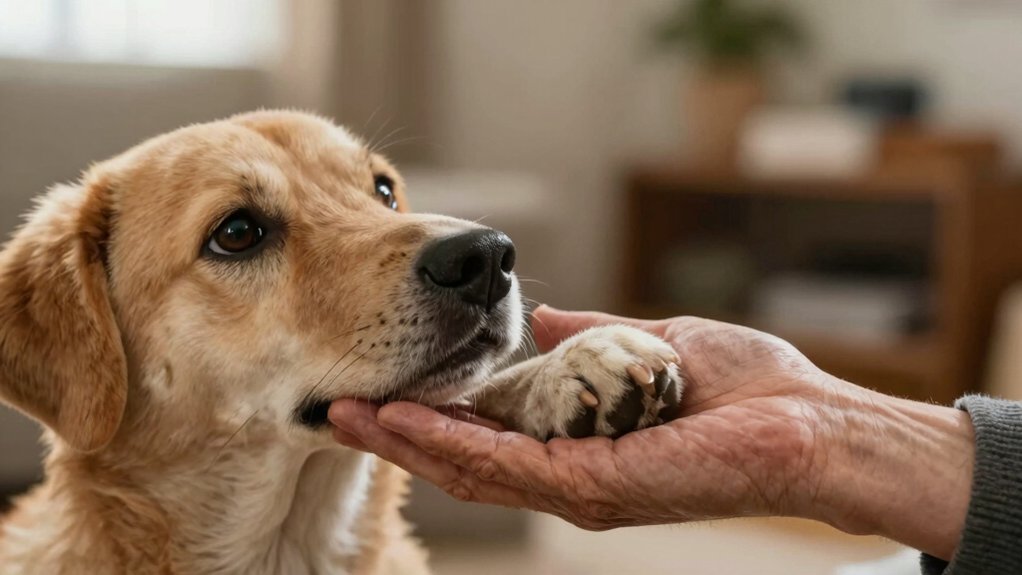
Ever wonder why your dog follows one family member around like a shadow while barely glancing at everyone else? That’s not random—it’s preference built through consistent care! When you feed your pup at the same time daily, take walks on schedule, and train with steady rewards, you’re becoming their trusted anchor. Your dog learns you’re reliable, predictable, and safe. They associate you with good things: meals, play, comfort, and guidance. That repeated pairing of your presence with positive experiences? It’s powerful bonding magic! Your consistent routines reduce their anxiety and build security. Soon enough, you’re not just their human—you’re their favorite person, their go-to for reassurance and joy. Research shows that dog morphology and appearance may initially catch an adopter’s eye, but it’s the behavioral consistency you demonstrate that truly determines whether a dog bonds with you long-term. That’s how preference truly forms!
When Past Experience Shapes a Dog’s Person
Your pup’s past is like an invisible blueprint that shapes who they’ll choose as their favorite person, and it’s honestly pretty remarkable how much their history matters! Did you know that dogs who’ve experienced abuse often gravitate toward someone completely different from their past handlers? If your rescue was hurt by a tall man with a deep voice, they might naturally prefer your softer-spoken partner instead. Similarly, puppies socialized mainly with women tend to seek out female family members first. Street dogs or shelter pups who’ve survived alone often become hyper-attached to whoever makes them feel safest. That chosen person becomes their security blanket, their decision-maker, their everything. Your dog isn’t being picky—they’re being smart about survival! Understanding that adjustment takes months, not weeks, helps you give your dog the time they need to fully trust and bond with their chosen person.
Behavior vs. Favoritism: Understanding Dog Attachment
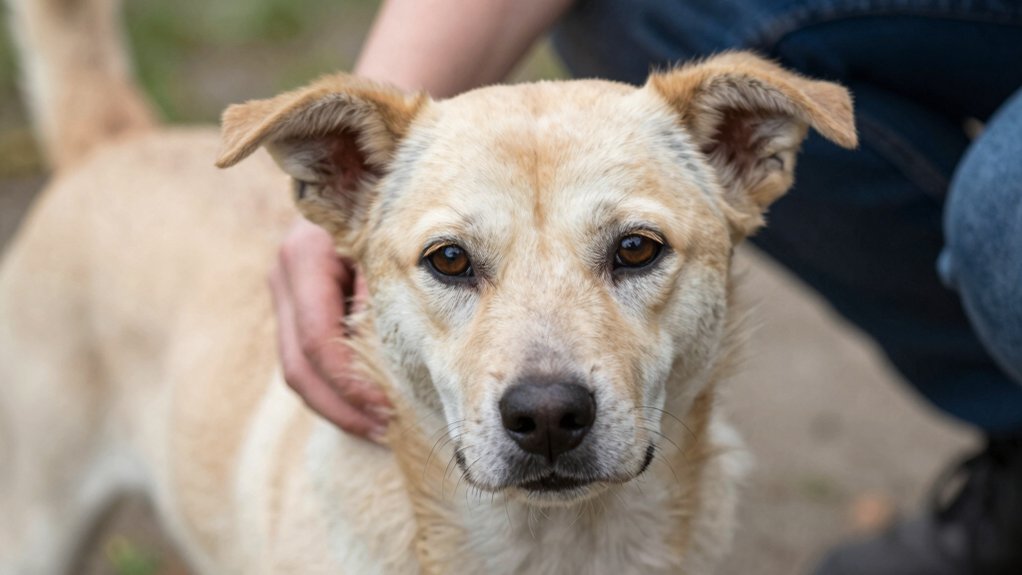
When your dog follows one family member from room to room while barely glancing at another, it’s not rudeness—it’s attachment! Your pup isn’t playing favorites based on who’s “nicer”—they’re showing a real bond! Think of attachment like having a safe anchor; your dog uses that special person as their secure base for exploring the world. When you’re around, they feel brave enough to play and investigate! Notice how your dog’s behavior stays consistent across different days and situations? That’s the real telltale sign of genuine attachment, not just excitement about treats or playtime. Your dog chooses based on who spends quality time together, walks them regularly, and responds to their needs—not random preference! Understanding this helps you appreciate your unique connection! Research shows that secure attachment between dogs and their primary caregivers leads to better stress reduction and emotional well-being, which means your dog’s loyalty actually reflects their trust in you as their safe anchor.
Building Your Bond Beyond the Honeymoon Phase
Just as a plant needs consistent watering to grow strong roots, your dog’s bond with you deepens through daily routines that become as reliable as sunrise! Those predictable feeding times, regular walks, and play sessions? They’re not just habits—they’re love languages your pup actually understands. When you stick to schedules, your dog’s stress melts away, and attachment strengthens naturally over months and years. Think of it like building trust through showing up, again and again. Your consistent care signals that you’re a safe, dependable partner in their world. Research shows that dogs scored significantly higher on companionship and nurturance than even closest human relationships, demonstrating just how meaningful this bond truly becomes. So those unglamorous daily rituals—the early morning walks, the scheduled meals—they’re genuinely transforming your relationship into something unshakeable and beautifully real!
Adoption Stories That Prove Dogs Know
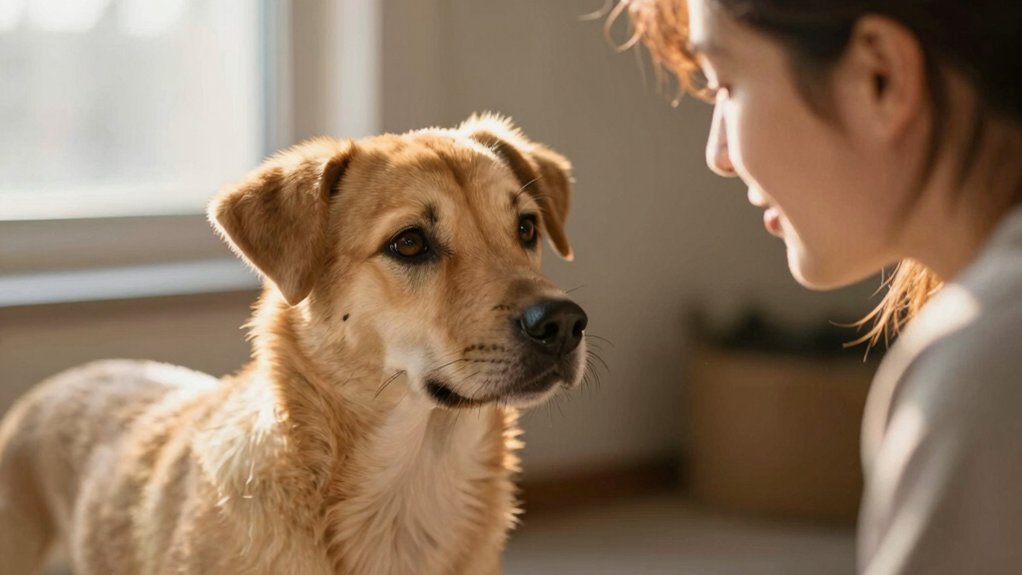
Visualize this: a shelter visitor walks through the doors, and suddenly, a dog that’s been quiet all week starts moving—pressing against the glass, following that one person through every room, ignoring everyone else completely. This isn’t coincidence, friend! Shelter staff witness these moments constantly. Dogs repeatedly approach one specific visitor, lean into their legs, and make sustained eye contact while tail-wagging enthusiastically. That withdrawn pup suddenly becomes affectionate? They’re communicating something real. The gentle paw tap, the relaxed body posture, the choice to lie down beside that exact human—these behaviors predict adoption success remarkably well. Research shows that dogs adopted spent twice as much time lying in proximity to their adopters compared to those not adopted. Your future dog isn’t just reacting randomly; they’re actively selecting their match, signaling compatibility through unmistakable behavioral cues that say, “You’re my person!”
Why Adopting Means Being Chosen Back
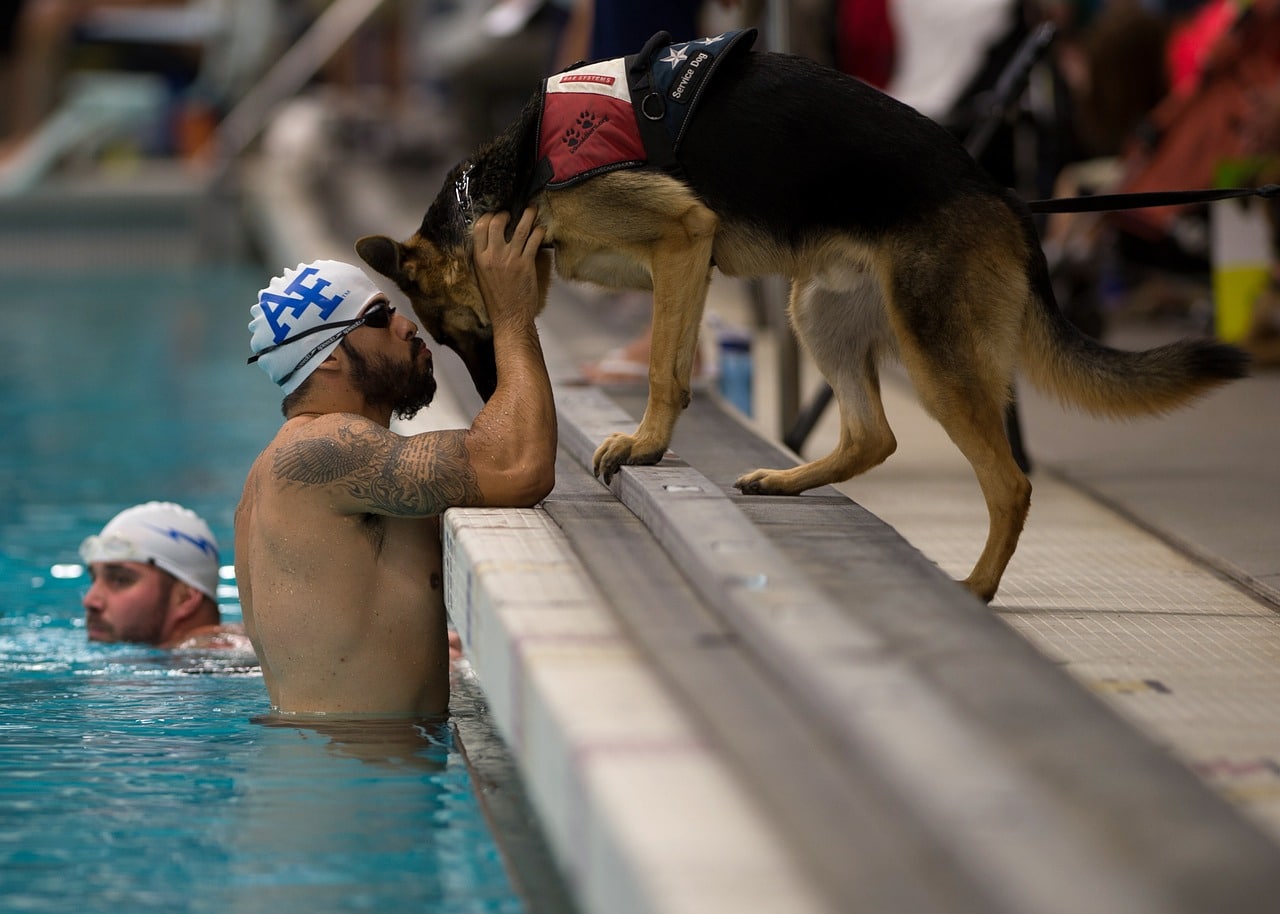
When you adopt a dog, you’re not just choosing them—they’re actively choosing you right back! Think about it—your new pup didn’t randomly wander into your life. Dogs use incredible abilities to read people, watching how you move, listening to your voice, observing your energy. They’re selecting you as their secure base, their safe person, their family! When your dog leans against your leg or seeks you out during playtime, they’re saying “I pick you.” That reciprocal choice transforms adoption from a one-way transaction into something genuinely mutual. You’re not rescuing them alone—they’re rescuing you too, cementing a bond built on genuine selection! This mutual rescue creates an exceptionally strong bond between adopter and dog, where both parties experience the profound rewards of choosing each other.
Frequently Asked Questions
What Percentage of Shelter Adoptions Could Eliminate Euthanasia Nationwide if Increased by 6%?
A 6% adoption increase adds roughly 252,000 placements yearly—you’d offset about 41% of current euthanasia using ASPCA’s figures, or 67% using Best Friends’ estimates. Here’s the catch: you can’t solve this through adoptions alone! You’ll need to combine that boost with intake reduction and return-to-owner programs. It’s like adding more lifeboats, but you’ve also got to slow the ship down!
How Do Dogs Rehomed From Male Owners Typically Bond Compared to Female Owners?
You might think gender matters hugely in dog bonding, but here’s the thing—it really doesn’t! Research shows no significant differences between male and female owners in attachment levels. Both engage equally in play, offer comparable comfort, and display similar affiliation behaviors. Your dog bonds with you based on consistency, care, and connection, not your gender. Pretty cool, right?
What Proportion of Non-Adopters Believe Shelters Lack Their Desired Companion Type?
About one-quarter to one-third of non-adopters believe shelters lack their ideal pet! You might think there’s just no right dog waiting for you, but here’s the thing—you’re often picturing something specific. Maybe you’re imagining a tiny puppy or a purebred, when shelters overflow with wonderful adult mixed-breeds. It’s less about actual selection and more about mismatched expectations between what you want and what’s actually available!
Why Do Nuisance Behaviors Account for 8%-44% of Adoption Returns Across Shelters?
You’re seeing such a wide range—8% to 44%—because shelters differ hugely in their resources, training programs, and adopter support systems. Some shelters really invest in pre-adoption counseling and post-adoption check-ins, which catches problems early! Others lack those programs, so adopters feel abandoned when normal stuff like barking or chewing happens. Plus, community differences matter—some neighborhoods have tighter living spaces where energetic dogs struggle more. It’s not the dogs; it’s the mismatch between expectations and reality!
What Percentage of Dog Acquisitions Occur Outside Shelters Despite Adoption Preferences?
Here’s the thing—you’d think adoption would dominate, but it doesn’t! Over 60% of dogs you bring home come from breeders, pet stores, or informal sources, not shelters. That’s right, you’re choosing non-shelter options despite genuinely preferring adoption in surveys. Why? You want specific breeds, faster processes, and puppies without unknowns. The gap between what you say and what you actually do? It’s surprisingly wide, friend!
References
- https://pmc.ncbi.nlm.nih.gov/articles/PMC4494324/
- https://bestfriends.org/who-we-are/media/new-data-shows-if-6-percent-more-americans-chose-adopt-versus-purchase-pets-all-us
- https://www.kinship.com/dog-behavior/how-do-dogs-choose-favorite-person
- https://faunalytics.org/people-want-adopt-dogs/
- https://www.humananimalsupportservices.org/uncategorized/reducing-returns/
- https://www.upworthy.com/how-dogs-favorite-person
- https://vocal.media/petlife/when-shelter-dogs-choose-you
- https://greatergood.com/blogs/news/cw-rescue-dog-returned-for-size-finds-hope
- https://www.youtube.com/watch?v=NTgD4r9WJxk
- https://www.youtube.com/watch?v=BBhngcb9CUM